Matter SDK Developer Guide
Platform-by-platform breakdown of Matter SDK architecture, core APIs, and getting-started paths — from Android to iOS to Web.
3 Platforms·Commissioning · Control · Limits
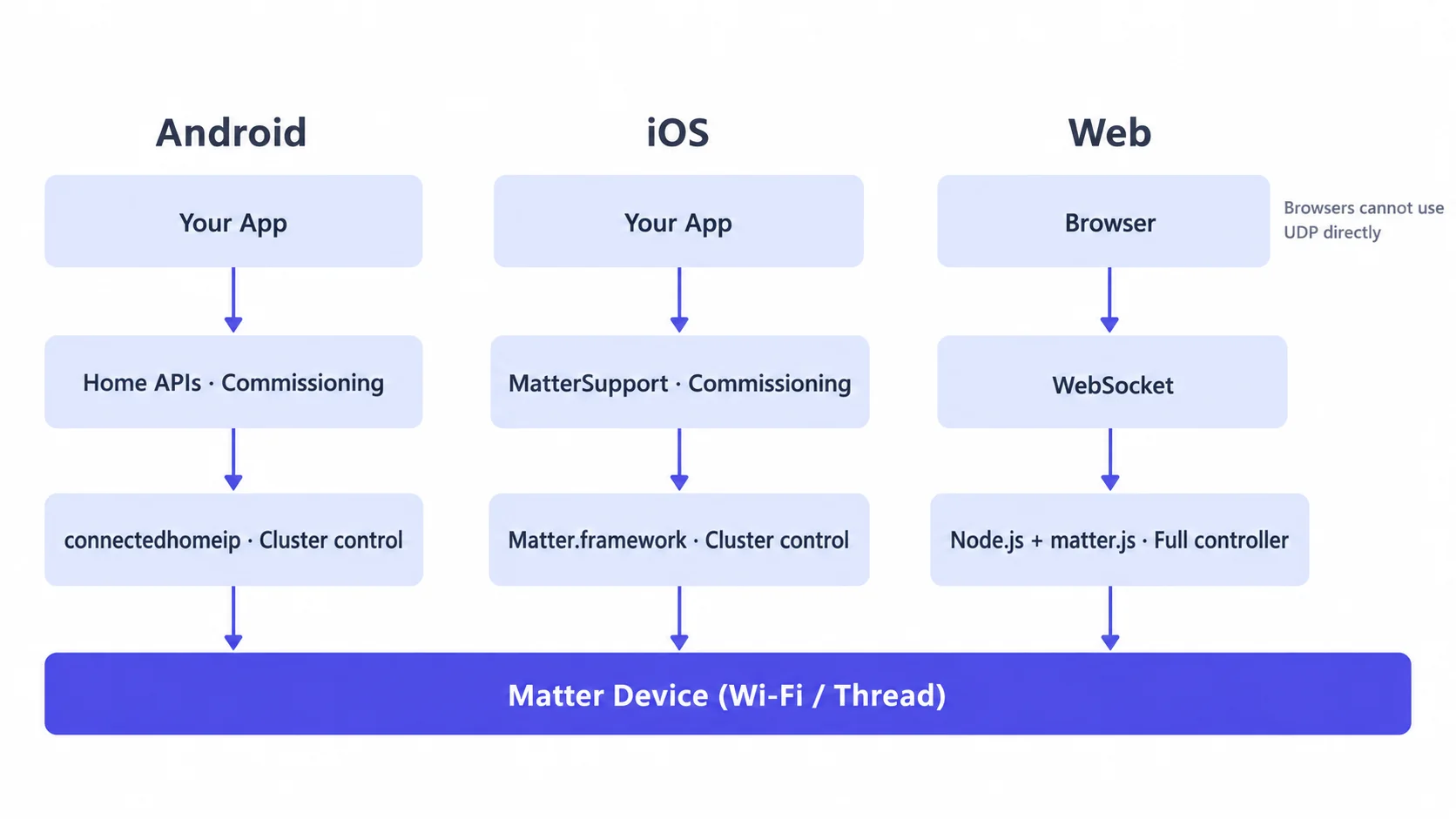
Android
Two-layer commissioning via Google Play Services
Home APIs provide unified commissioning + control + automation
View DetailsiOS
Native system frameworks with MatterSupport extension
System-level commissioning UI, no external dependencies
View DetailsWeb / Node.js
Browser via WebSocket proxy, full control on Node.js
Pure TypeScript implementation by Open Home Foundation
View DetailsPlatform Comparison
| Feature | Android | iOS | Web / Node.js |
|---|---|---|---|
| Commissioning | Full (GPS proxy) | Full (system UI) | Server-side only (no browser support) |
| Device Control | Home APIs / direct Cluster | MTRBaseCluster / MTRDevice | WebSocket proxy / direct Cluster |
| Thread Support | GPS Thread SDK | Requires HomePod / Apple TV | Native in matter.js |
| Minimum Version | Android 8.1 (API 27) | iOS 16.1 | Node.js 20.19 |
| External Dependency | Google Play Services (required) | None (built into OS) | None (pure JS) |
| Open Source | connectedhomeip (optional) | Matter.framework (closed) | matter.js (fully open) |