Matter Protocol Learning Hub
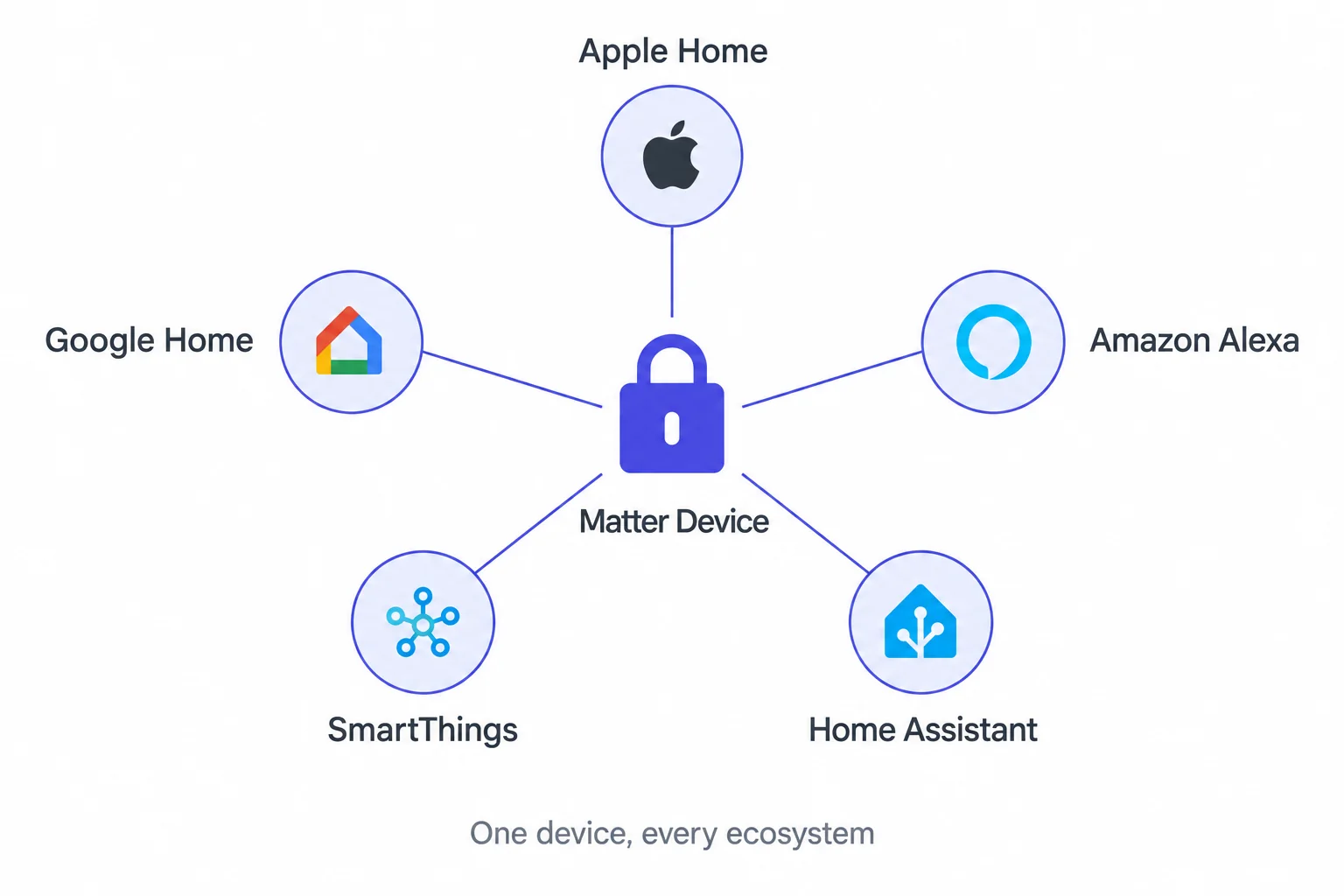
Matter is the unified standard protocol for smart homes. Whether it's Apple, Google, or Amazon's ecosystem, any device that supports Matter can interoperate and be controlled across platforms.
Whether you're an app developer, firmware engineer, tester, product manager, or designer, this site helps you understand Matter's core concepts from scratch, look up every Cluster definition, integrate the SDK on your platform, and keep up with each new version.
Concepts
From Node to Command, understand Matter's four-layer data model through everyday analogies — no technical background needed.
Cluster Manual
82 Clusters in 12 categories, organized by the official spec, each with complete field definitions, enum values, and real device data examples.
Data Tools
Online tools such as the JSON Parser and Matter ID Lookup: paste raw device data to see what a device is and what it supports, or reverse-look-up any number from a log.
SDK Guides
Matter SDK architecture, commissioning flow, device control examples and pitfalls for Android, iOS and Web.
Version Roadmap
What each release from 1.0 to the latest added, which version ecosystems are adopting, which is most deployed, and what comes next.
Ecosystem Resources
CSA specs, platform developer docs, chip vendor SDKs and core open source projects, all on one page.
Learning Roadmap
Recommended path from concepts to hands-on practice
Understand What Matter Is
The basic concepts of the unified smart home protocol — what problems it solves and why it matters
Concepts →Master the Four-Layer Model
Endpoint, Cluster, Attribute, Command — the four core layers of Matter's data model
Concepts →Browse the Cluster Manual
Start with DoorLock to learn field definitions, enum values, and data formats
DoorLock Cluster →Parse Real Device Data
Paste device-reported JSON data into the parser to see what each field means
JSON Parser →Match Real Devices to Fields
Combine real device data with Cluster definitions to truly master Matter's data structure
Cluster Manual →Integrate the SDK
Get commissioning and device control working on Android, iOS or Web — turn protocol knowledge into running code
SDK Guides →Follow Version Evolution
See which device types and capabilities each version added, and decide which version your product should target
Version Roadmap →Quick Reference
Find what you need fast
Why Learn Matter
Speak the Same Language
When firmware says "Cluster 0x0101 Attribute 0x0 returned 0x01", everyone immediately knows: the door lock is locked. No need to flip through docs or double-check.
Useful for Every Role
App developers understand what devices can do; firmware engineers align Cluster implementations; testers know which fields to verify; product managers understand device capability boundaries.
No More Guessing at Data
See a JSON response from a device and directly look up what each field means in the Cluster definition. Whether you're coding, testing, or reviewing requirements, you can read it yourself.